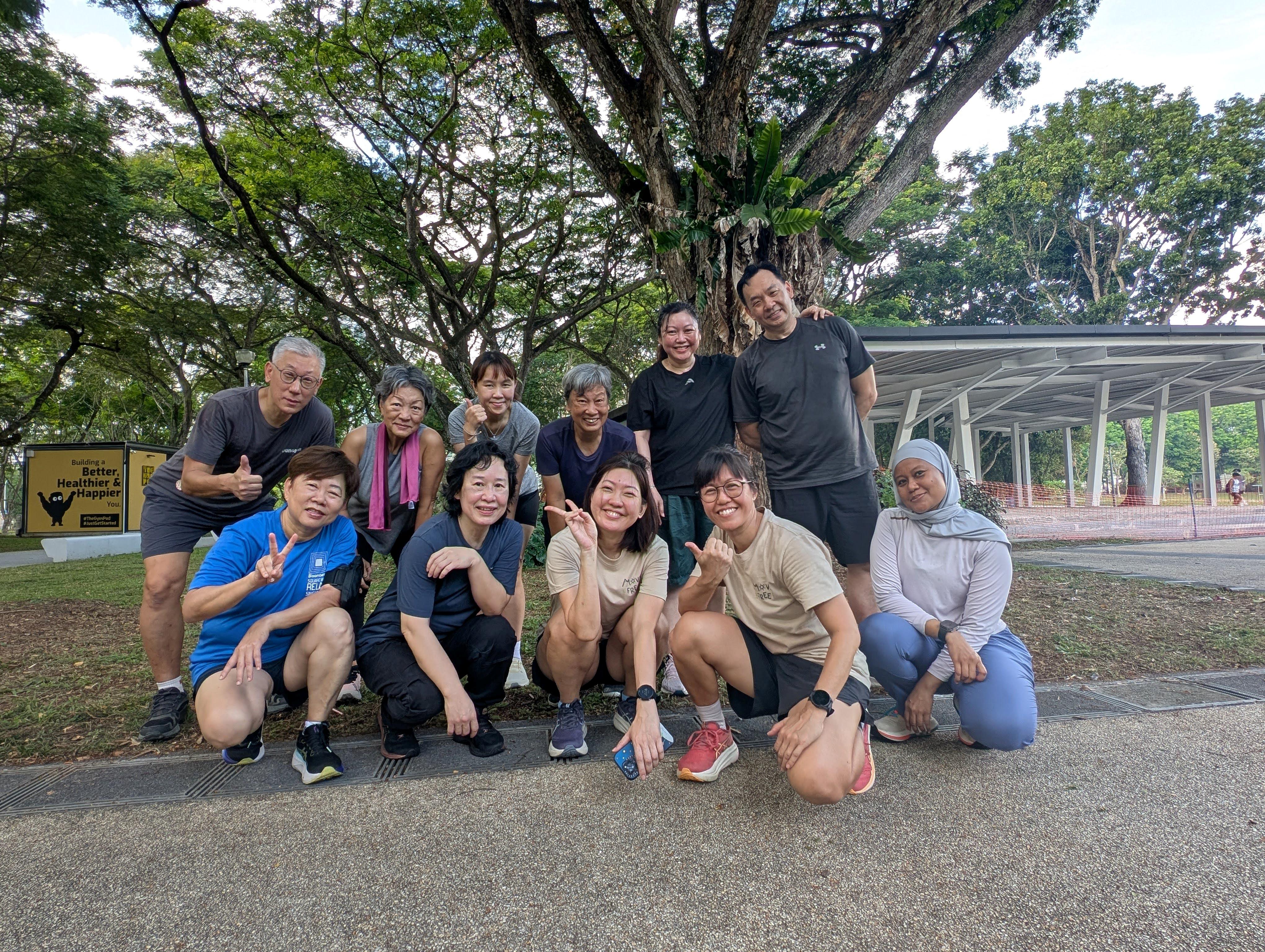
I've spent over 20 years in physical education, sports management, and strength and conditioning coaching. But Move Free isn't about performance, it's about helping you feel at home in your body again.
I learned that the hard way. A reconstructed ACL and an unrepaired meniscus forced me to rethink how I trained.
Movement feels best when it's playful; something you want to come back to, not a box to tick before you get on with your day. And that shift happens when you actually understand why your body's doing what it's doing. Once that clicks, movement stops feeling like a chore and starts feeling like yours.
I used to train one way, hard, singular, locked into one sport. When I started moving in varied directions instead, the kind of adaptability MovNat champions, the knee pain I'd assumed was permanent stopped showing up. There was a smarter way to train, one that didn't mean forcing yourself into a single gym routine or a single sport.
That's the whole idea behind Move Free, and it comes down to three things I keep coming back to with every client and every gathering.
We start by rebuilding ease in the movements everyday life already asks of you, sitting, standing, lifting, reaching, getting up off the floor.
Games, partner drills, and shared challenges bring back the curiosity that "working out" tends to strip away.
I teach the why behind each movement, so you understand your own body and can keep making progress long after a session ends.
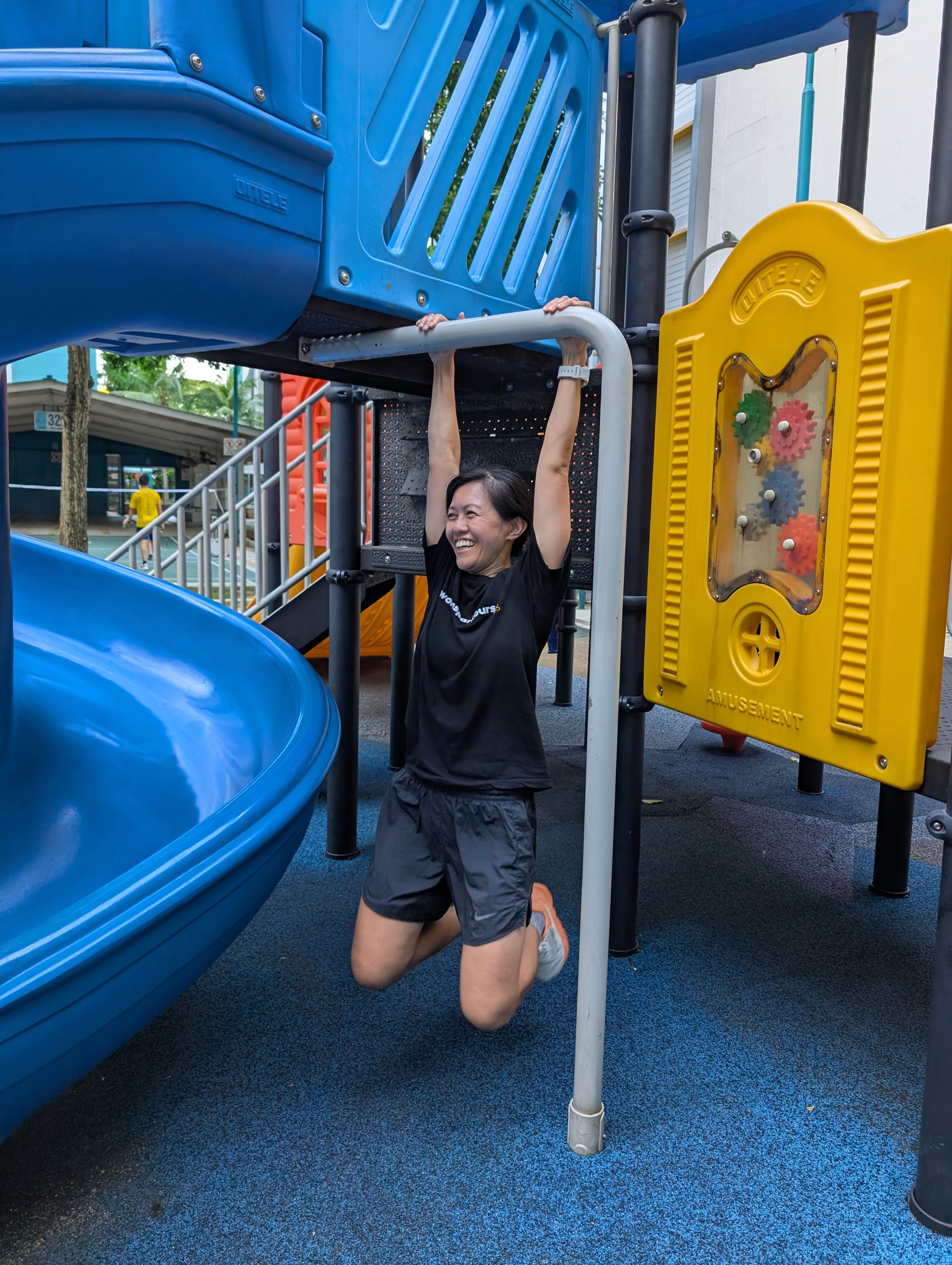
I started out studying engineering, then found my way into physical education teaching and never really left movement and sport again. Along the way I helped build a multi-sport athletic development program at Singapore Sports School, earned an MSc in Exercise & Sports Studies from NIE, picked up certifications in strength & conditioning, nutrition, and movement coaching, and trained in MovNat and natural movement practice.
Then that injury, in my late 30s, changed how I thought about all of it. I stopped chasing performance and started paying attention to what actually keeps a body capable long-term: freedom of movement, confidence, and longevity. That's the lens Move Free is built on today. And I'm still a student myself, still learning through adult gymnastics and women's parkour, because staying curious about my own body is part of how I coach yours.
Every session comes back to a small set of fundamental movement patterns, the basic ways your body is built to move. They look simple, and that's the point: most of us lost them so gradually we never noticed. If you can't get up off the floor without using your hands, or sit in a deep squat while you chat, or carry the groceries up the stairs without your back complaining by evening, these patterns are exactly where we start. Understanding them takes the guesswork out of training: you're not just following an exercise, you're learning how your own body works, and why it aches where it does.
Sitting down and standing up with control.
Bending safely from the hips, for lifting and reaching.
Moving confidently from one leg to the other, like climbing stairs.
Moving load through space, groceries, luggage, kids.
Turning safely through the torso.
Moving something away from you, like a heavy door or pressing up out of a chair.
Bringing something toward you, like opening a door or picking something up.
Getting up and down from the ground with ease.
Getting these patterns back is the foundation, not the finish line. Once your body trusts them again, we build on top: strength, coordination, a bit of spring, the kind of everyday athleticism that means carrying, climbing, and playing stop being things you brace for. Not training to become an athlete. Training so your body is simply up for things, whether that's a long hike, a game with your kids, or just a week that doesn't leave you sore.
Games, partner drills, and shared challenges genuinely need other people in the room to work; that's the whole point of building Move Free around small groups, not 1:1 and not big classes. I set the space and the challenge, and you rediscover what your own body can do alongside people going through it with you.
A group of up to four keeps that playfulness possible while I can still see exactly how each person moves and coach around it. 1:1 sessions are there for people who want fully individualised attention, but for most people, the small group is where the real progress happens.