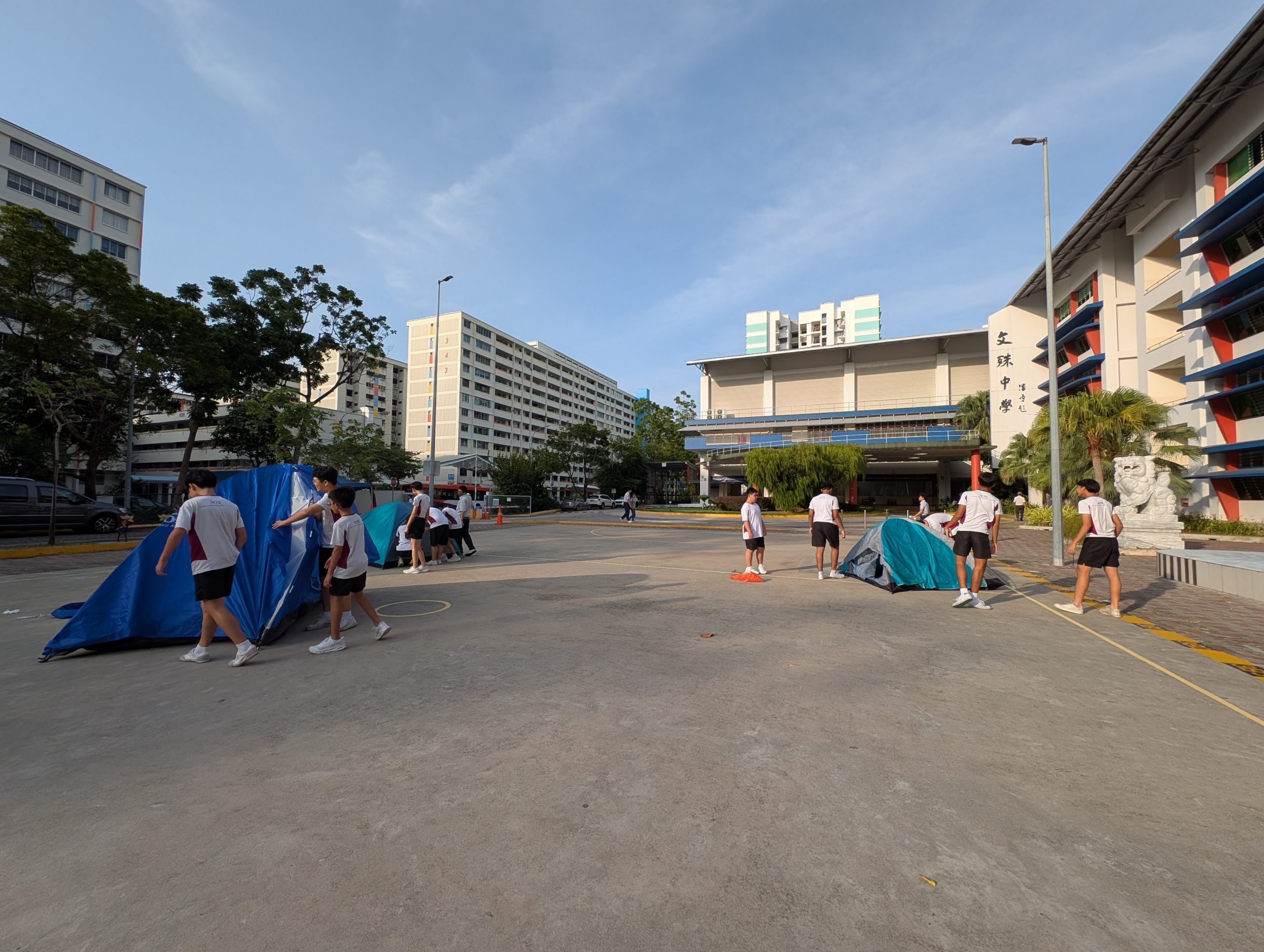
I’ve recently transitioned from a flexi adjunct primary school PE teacher back to secondary school in 2026. I was professionally trained as a post-diploma graduate in secondary school physical education, so working with youths was nothing new to me.
The main reason for this transition was an experiment to see how the “Move. Play. Empower.” concepts could be seamlessly integrated from a primary school to a secondary school setting. In primary school, the “Move” and “Play” themes were far more relevant, while the “Empower” theme, requiring higher levels of autonomy and self-reflection was harder for the average child to grasp. The secondary school setting, therefore, felt like a more suitable environment to empower youths with skills and knowledge they could eventually apply independently.
Long story short, the proof of concept for Move Free’s methodologies is still ongoing. The “empowerment” part is hard to measure. Actually, you can’t really measure it. How do you know when a child or youth is empowered?
In Singapore, where getting kids to excel in a sport or training for DSA admission is rampant, Move Free doesn’t stand a chance in the traditional sense. The outcomes are transactional: I pay a vendor, you deliver results : be faster, be stronger, outpace your opponents in trials.
But Move Free was never built on that premise.
I believe in purposeful, intentional programme design. By the end of every session, the messages delivered across activities and post-activity debriefs should consistently reflect intentional empowerment. At its core, intentional empowerment means deliberately designing actions, environments, and interactions so people gain agency, confidence, and capability, instead of empowerment being an accidental by-product. It is about designing experiences, through movement and play, that help people trust their bodies, their choices, and their capabilities.
Unfortunately, this is hard work. It isn’t your usual cut-and-paste programme with no regard for the different participants who come your way. And it certainly isn’t what profit-driven companies are keen to invest in.
In line with what Move Free advocates, the goal of making physical activity accessible and sustainable for all; empowerment plays a major role, especially after one graduates from school. How many of your friends are overweight, unfit, or sedentary after leaving school? Probably a high percentage.
Going back to school was, for me, a meaningful way to test these concepts (while earning a part-time income, since Move Free hasn’t made me any big bucks…lol) and to better understand and bridge the gaps between the school PE syllabus and the ability to apply healthy, sustainable habits in real-world settings.
“Healthy habits start young,” as the old adage goes. But in reality, within a highly competitive environment, many children have their lives planned for them from a young age. They are told to focus on outcomes; first to excel academically, and later to perform at work. Empowerment for one’s health remains an elusive concept until the right messages are reinforced through the environment, parents, teachers, and workplace culture.
This is why the intentional design of programmes, environments, and messages to cultivate healthy and sustainable living is worth investing in—if we truly want to see real, impactful outcomes.
If this resonates with you, drop me a DM or WhatsApp me at 8930 3308 if you’re keen to work together, collaborate, or simply build a community around a healthier, more sustainable way of life.